Showing posts with label mclaren mp4-12c price. Show all posts

McLaren MP4-12C

McLaren MP4-12C

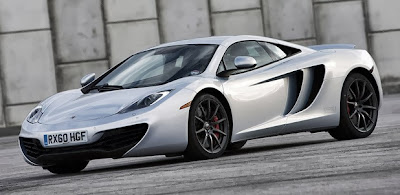
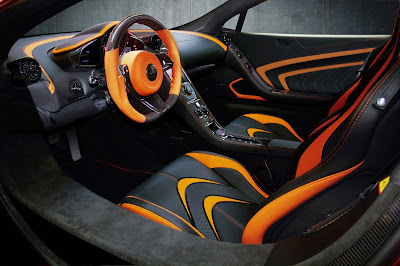
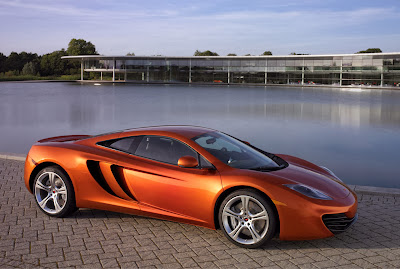
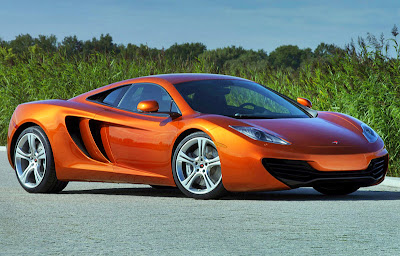
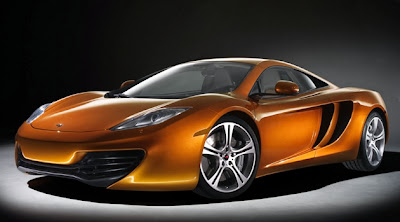
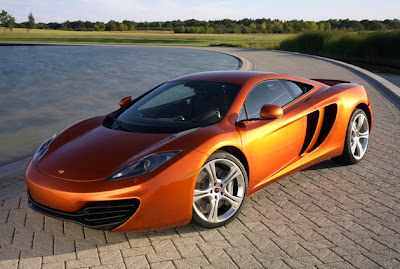
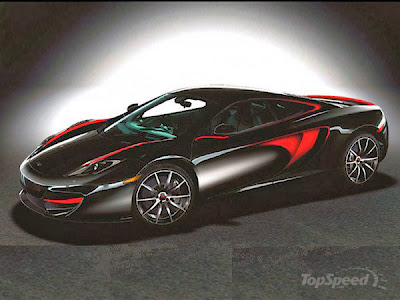
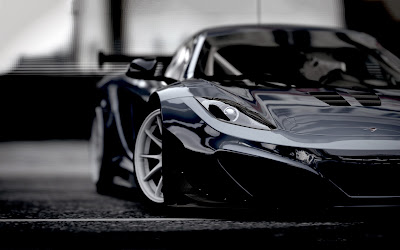
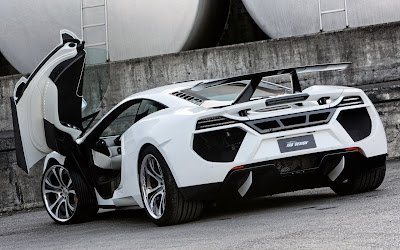
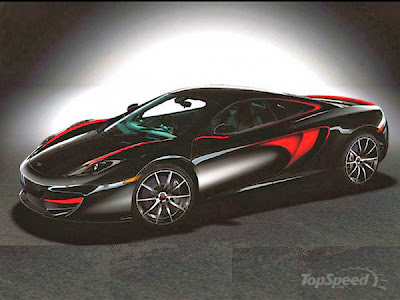
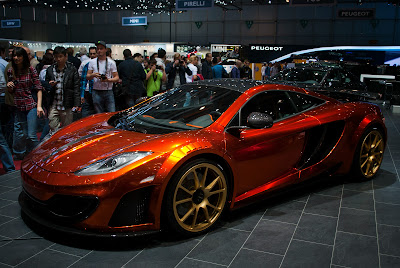
After taking a few years off from building cars, McLaren has come back with a great deal of momentum by stealing headlines with two new super cars, the first of which was the new MP4-12C. The new mid-engined super car offers a superb mixture of everyday driving dynamics and high-performance driving characteristics that make it at home on the race track or the roadways. The new MP4-12C has been arriving at dealerships around the world for over six months and a variety of aftermarket tuning companies have already designed and produced new upgrade programs for them. One company, DMC Tuning in Germany, decided to wait and work on fine-tuning their upgrade program to produce the best upgrade program for the new super car. Called the "Velocita", the new carbon fiber upgrade program includes aerodynamic body work, a new exhaust system, and lightweight COR rims made from forged aluminum alloy.

The first part of the new upgrade program that was addressed was the aerodynamics of the McLaren MP4-12C. The German aftermarket tuning company developed a carbon fiber body kit using advanced CAD software and lengthy wind-tunnel testing to create a functional option with an OEM fitment. The new body kit consists of a new front fascia that uses new grille inserts and a splitter to generate downforce at the front axle and improve cooling to the front radiators and braking system. A pair of new side skirts helps to redirect air away from the new set of COR rims at the rear and reduce drag for the super car. The rear of the MP4-12C Velocita features a new diffuser with dual fins to help create a suction effect with the pavement and a large rear spoiler atop the engine cover that generates downforce without increasing drag.

The next step was to upgrade the engine. The 3.8-liter twin-turbocharged V-8 engine was outfitted with a new lightweight titanium exhaust that improves performance. Everything from the exhaust manifold to the rear tailpipes is constructed form titanium to reduce weight and backpressure for better overall performance. The result is over 600 brake horsepower being sent to each of the rear COR rims with a sub 3.5-second 0-62 mph acceleration time.

The final aspect of the new super car that the team at DMC Tuning upgraded as part of the new McLaren MP4-12C Velocita program was the wheel and tire setup. The team opted for a new set of COR rims made from forged aluminum alloy to keep weight to a minimum at the wheel hub. The wheels were installed with a 21-inch diameter at the front and rear axle and shod with 255/30 ZR21 front and 355/25 ZR21 Continental Sport Contact high-performance tires for better grip.

McLaren MP4-12C

McLaren MP4-12C

McLaren MP4-12C

McLaren MP4-12C

McLaren MP4-12C

McLaren MP4-12C

McLaren MP4-12C

McLaren MP4-12C

McLaren MP4-12C

McLaren MP4-12C

McLaren MP4-12C

McLaren MP4-12C

McLaren MP4-12C

McLaren

McLaren
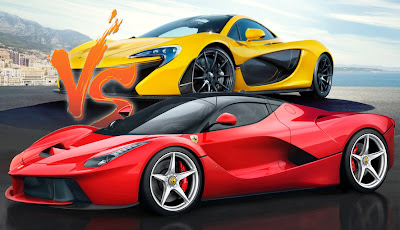
Every day, it seems, newer and faster cars are appearing on the automotive scene. Ferrari just debuted the V-12 hybrid LaFerrari. Porsche is soon to roll out its 918 Spyder hybrid. Pagani has the new Huayra. Koenigsegg has the Agera. And, Ascari has the KZ1R. Bugatti is up to around 12 variations on the Veyron. Each is more intense than the last. Now, it looks like the Hennessey Venom GT will steal the fastest car crown. Hell, there's even a $1 million electric hyper car on the market called the Rimac Concept One.

With each new model, each new new bit of technology and each new idea, manufacturers are trying to eek out every bit of horsepower, torque and performance to make their cars just that bit faster and better than everyone else's. But, no matter what the end result of the all of the design, testing and development is, every hypercar shares something in common: they all have the McLaren F1 as the inspiration and impetus for their existence.

Whereas the Lamborghini Miura is the progenitor of all supercars, the McLaren F1 took everything that is "supercar" and ramped it up. It is the granddaddy of hypercars. It blew its contemporaries out of the water, which was no small feat. The F1 comes from a generation of cars that includes the Ferrari F40, the Porsche 911 GT1 and the Jaguar XJ220. Last Monday, the McLaren F1 celebrated its 20th birthday. On 28 May 1992 McLaren unveiled the F1 at a launch party at The Sporting Club in Monaco during Monaco F1 Week. In honor of this momentous occasion, it seems like a good time to look back and see what made the McLaren F1 a truly great car and a centerpiece of automotive history.

It all begins, as many stories like this do, with racing, specifically with Formula One. In 1988, McLaren's Formula One team won 15 out of 16 races. Not a bad starting point for creating the world's fastest car. Anyway, after that season, McLaren Cars Ltd of Woking, England thought it a wise move to extend past racing into creating a road car. Being the same McLaren who just won 94 percent of their Formula One races, the car had to have the highest power-to-weight ratio to date but still retain daily driver usability.

Normally, that kind of refusal to compromise is a non-starter when it comes to designing a car. Not for McLaren. Because of their success in racing, they had nearly endless funds to spend on development of the F1. Oddly enough, that same attitude led to the car that dethroned the F1, the Bugatti Veyron, a little over a decade later.

McLaren Cars Ltd. tapped technical director Gordan Murray and designer Peter Stevens to make the McLaren F1 a reality. Keeping in mind the need to produce sufficient power while still maintaining reliability, Murray opted to equip the F1 with a naturally aspirated V-12.

After shopping the project to Honda and Toyota and being rejected by both, BMW and their famed M Division took an interest and designed the 6.1 liter 60 degree V-12. The engine, designated BMW S70/2 produced 618 horse and 480 ft/lb of torque. The BMW engine was 14 percent more powerful than Murray's original specs called for, but that was offset in part the engines weight. At 586 pounds, it was 35 pounds heavier than Murray's specifications.

The dry sump BMW S70/2 has an aluminum block and head, quad overhead cams with variable valve timing, a chain cam drive to maintain reliability and was mounted to a six-speed transmission with a triple plate clutch. As the engine was high revving (reaching max torque at 7,400 rpm) it produced a fair amount of heat. To guarantee insulation between the engine and the carbon fiber bay and monocoque, Murray lined the engine compartment with gold foil, a great heat reflector. A little less than an ounce of gold was used in each car. I wonder if the value of the F1s fluctuates with the market price for gold.

Thanks to BMW, McLaren achieved their goal of having the industry's best power-to-weight ratio, 550 hp/ton. In comparison to today's hypercars, the Ferrari Enzo reached 434 hp/ton, the Bugatti Veyron reached 530 hp/ton and the SSC Ultimate Aero TT bested it with 1003 hp/ton. And, that ratio showed in the car's speed. The F1 could accelerate from 0-60 in 3.2 seconds, 0-100 in 6.3 seconds, 0-200 in 28 seconds and run the quarter mile in 11.1 seconds at 138 mph. The McLaren F1 hit a world record top speed of 243 miles per hour. To this day, it is still the fastest naturally aspirated production car in existence.
McLaren

McLaren

McLaren

McLaren

McLaren

McLaren

McLaren

McLaren

McLaren

McLaren

McLaren

McLaren

McLaren

McLaren

McLaren

McLaren


Blogger Template By Suudy Gondrong